Category Archives: Kitchen Talk and Tips

Breadcrumbs – make your own instead of tossing stale bread

Some folks prefer the convenience of buying ready-made breadcrumbs, but I like to make my own.  I simply save any bread ends or scraps that would otherwise get tossed in a brown paper bag in my cupboard.  When I need breadcrumbs, I just toss the now dried scraps into my food processor and let it run for a minute or so.  That way, I don’t waste food, and, because I use mostly whole wheat products, the breadcrumbs have more fiber than most store-bought ones.

I got more than a cup of breadcrumbs from this batch

You can also grind a batch ahead of time but I recommend storing these breadcrumbs tightly covered in the fridge so they won’t get rancid, at least if they are made with a portion of whole wheat bread.  While the WW breads stay stable when left to dry is slices or pieces,  grinding causes the  naturally occurring oils in the whole grains to b e exposed to air and light, which causes a chemical reaction leading to rancidity.

Perfect (and easy!) Pork Chops

Dry. Tasteless.  Boring……  And, don’t get me going about that cream of mushroom soup and rice thing we all do with pork chops.

I had pork chops in the freezer and it was time to finally use them.  Some kind of bone-in sirloin chop.  They were under an inch thick, so I was hesitant to use a saute technique that I have used successfully on very thick chops.

But, Pam Anderson writing for USA Weekend in 2004 to the rescue!  No, not Pamela Anderson!  At least, I highly doubt it.  🙂

Anyway, here is her advice, excerpted from a Q&A section on allrecipes.com

——–

“It is possible to serve a beautifully brown, juicy pork chop without losing the food’s moisture, whether or not it was previously frozen.

First, choose the right skillet size. Use a 12-inch skillet for four chops. If you crowd the pan, you’ll end up overcooking the chops to get them to brown.

Saute with a combination of butter and oil. Butter helps browning; a little oil increases the butter’s smoking point so you get great flavor without burning.

Dry the food’s surface. Pat with layers of paper towels. Then season the food with salt and pepper, and lightly dredge in flour, shaking off the excess.

Add food only when the pan is really hot. Warm butter and oil over medium-high heat until butter solids turn golden brown and the first wisps of smoke start rising. You want to hear a solid sizzle when the food hits the pan.

Set a timer for three to four minutes, and leave the food alone! To develop a golden-brown crust, it needs to remain stationary. Resist the temptation to turn it before you hear the “ding.” ”

———————

AHA!  check this post from The Pioneer Woman Cooks! blog for info about this Pam Anderson. Note to self – take some time to check out the Pioneer Woman Cooks! blog.  Actually, I think I have been there before and may have even mentioned it in this blog.  Hit 50 years, memory be gone…

From some quick searching, I have also  discovered that Pam has written a number of cookbooks and is a former Executive Editor of Cook’s Illustrated.  (!)  Shows what I know! I plan to check out her cookbooks, that’s for sure.

Anyway, the advice is superb.  I had already learned that it is better to blot the marinade before grilling steaks to get a crusty exterior.  (Steve is the grill man, but I often do the prep. ) Doing the same for pork chops is equally beneficial.

When making these pork chops, I marinaded them for a few hours.  Then, my schedule got crazy so I needed to hold the chops for the next night.  No problem – I removed them from the marinade, dried them off, and put them in a tupperware until the next night, when I dredged them lightly in flour and follow Pam’s cooking directions.  YUM!   AND, even when reheated by nuking two days later, the leftover chops were still moist and tender.  Don’t lose this technique!

pork chops

This photo does NOT do the chops justice!

Click HERE for the recipe on which I based the marinade I concocted.  🙂

I used somewhat the same proportions and ingredients, except for OJ instead of pineapple juice, and minced shallot, I think….no scallion or ginger.  But, the sweet and garlic taste was still there.   To each his or her own marinade, I say!

In any case, it was all good.  Next post will be the Brown Rice and Veggie Casserole I made to go along with the chops.  Here is a teaser picture.  <grin>

Perfect Oven-Roasted Vegetables

I need to do another post to finish up Easter, especially so I can share the recipes of the lovely items that other folks brought.  But, it has been a busy few weeks.

I was totally booked the entire weekend of April 10-11 and again this past weekend, with the weeks in between Easter and now taken up by preparing, as Board President and de facto volunteer Admin person,  for my church’s annual meeting (www.wakefielduu.org) on 4/15 and also for my father-in-law’s Celebration of Life service on 4/17.  All went well, but I was glad to finally have time to cook a meal last night!

It was just the simple but tasty Garlic Chicken Leg Quarters and, to keep things on that simple theme, I thought I would roast potatoes and also roast the other veggies.  BUT…how to do everything at once without having to set multiple timers and add the other veggies after the potatoes, etc. ? I didn’t want to have burnt broccoli and hard potatoes, but I didn’t want to have to open the oven once I put the chicken in!  (I guess I was still feeling stressed for time even though I didn’t even have a meeting to go to after dinner.  🙂

ANYWAY -here is my solution.  I found a recipe for roasted broccoli and potatoes that said, along with seasoning and a few tablespoons of olive oil, just put it all together in a 9×13 casserole, cover tightly with foil, and bake at 400 for 45 minutes to an hour.   How easy is that?

The chicken is supposed to cook for 50 minutes at 425, so I just cooked both dishes at 400 for the hour and that was that – ready to serve.

For the veggies, I used broccoli, carrots, new potatoes, and mushrooms for the veggies, chopped some fresh rosemary, and added sea salt and freshly ground pepper before roasting. They were fabulous!  Not quite the same crunch on the outside that you get when roasting veggies uncovered, but there was still a satisfactory firmness to the outside and that lovely intense flavor that comes with roasting. And, because the dish was covered, there was no charring of the broccoli, the musrooms were not shriveled, and all the veggies has a creamy sort of texture on the inside.

Here is the original recipe on which I based my roasted veggies – and from which I learned about covering with foil! Click the name of the recipe to go to the original recipe web page, courtesy of Teri’s Kitchen.

__________

Roasted Broccoli and Potatoes

  • 1 medium head broccoli or bunch broccoli crowns, tough ends removed, remainder cut into medium florets and small stems
  • 3 small potatoes, cut into 1-inch chunks
  • 3 large cloves garlic, minced
  • 1 teaspoon dried marjoram leaves
  • Salt and pepper to taste
  • 2 tablespoons olive oil
  • 1/4 cup freshly grated Parmesan cheese

Preheat oven to 400° F. Place broccoli and potatoes in a 13x9x2-inch baking dish. Add the next 4 ingredients and toss or stir to combine. Cover tightly with foil. Bake until the vegetables are tender, about 1 hour. (If you prefer crispier vegetables, check them after 45 minutes.) Remove the foil and sprinkle with the Parmesan cheese. Return to oven just until the cheese melts slightly. Serve hot or room temperature.

__________

If I am going to roast just one type of veggie (especially potatoes) or a group of veggies that all take the same time to cook, I am sure I will still use the uncovered method.  But, if I am not sure how long it will be before dinner (the covered ones will hold at a “keep warm” temperature) or want to combine veggies in one simple dish, I will be using the covered method of roasting veggies.  And, not just for hurried home meals.  This is good enough for company!

Chicken Breast With Eggplant, Shallots and Ginger

This was really tasty! I was unsure when I first viewed the recipe, but I am really glad I tried it.

I bought a Sicilian eggplant from Farmer Dave at the Wakefield Farmer’s Market and didn’t feel like doing the usual garlic, olive oil, and/or tomato-based thing, or even cheese, but did want a “one pot meal” with some kind of animal protein.  I found this nifty  Chicken Breast With Eggplant, Shallots and Ginger recipe by Matt Bittman via  Bitten, Recipe of the Day, in the New York Times. Click the title to see the original post.

Chicken Breast With Eggplant, Shallots and Ginger

Here is the original recipe with my adaptations added in brackets.

Ingredients

  • 8 ounces shallots (about 6 large) [I started with 8 oz but one was partially rotted, so 6 ounces is more like it.]
  • 1/4 cup neutral oil, like canola or grapeseed [I used grapeseed]
  • 1 to 1 1/4 pounds eggplant, cut into 1-inch cubes
  • Salt and freshly ground black pepper
  • 2 tablespoons minced fresh ginger or 2 teaspoons dried ginger [I used fresh ginger]
  • 1 1/2 pounds skinless, boneless chicken breasts (4 half breasts) [I used Bell & Evans]
  • 1/4 cup or more minced fresh cilantro [I used mostly flat parsley and some chocolate mint because I could not get any cilantro that day from Farmland and I found a suggestion online calling for a bit of mint added to parsley as a substitute for cilantro.]
  • everything but the chicken

    everything but the chicken

    It is hard to see here, but the mint leaves in with the parsley have a purplish hue that went nicely with the eggplant in this picture.

Method

  • 1. Peel shallots. If they are small, leave them whole. Otherwise, cut them in half the long way. (Most large shallots have two lobes and will naturally divide in half as you peel them.) Heat the broiler or a gas or charcoal grill. [I used the gas broiler in my oven]
    peeled shallots

    peeled shallots

    Half of one my big shallots had rot. Plus, you lose a lot when peeling.  Here is what was left to use, which was quite enough to do the trick.  Don’t they look lovely?  I just love shallots.

into the frying pan

into the frying pan

  • 2. Place oil in a large nonstick skillet, and turn heat to medium high. Add shallots, and cook about 5 minutes, stirring occasionally, until they begin to brown. Add eggplant, salt and pepper, and lower heat to medium. Cook, stirring occasionally, until eggplant softens, about 15 minutes.
next, add the eggplant

next, add the eggplant

  • 3. When eggplant begins to brown, add half the ginger, and cook 3 minutes or so more, until eggplant is very tender and the mixture fragrant.
  • [In lieu of steps 2 and 3, I did not use a nonstick pan.  I used my 12″ stainless steel All Clad pan.  I covered the pan after 5 minutes, and added 1/2 cup water after 12 minutes, and then cooked for 10 minutes more with the water, adding the ginger for the last 5 or so minutes.  I did this because I didn’t peel the eggplant and I didn’t think the called-for cooking time and method would soften the skin enough.]
ginger sliced

This was one "leg" of the ginger and made one Tbsp minced

Here is a trick for mincing ginger: slice it one way, then turn 90 degrees and slice again. to get the results in this picture.  Next, slice crosswise in tiny increments.  Finish up mincing to desired size.

the eggplant "relish" all cooked and ready to go

the eggplant "relish" all cooked and ready to go

  • 4. Meanwhile, rub chicken breasts with salt, pepper and remaining ginger. Grill about 4 inches from the heat source for 3 minutes a side or until done. [All our broilers vary – preheated the broiler as called for and cooked the chicken breast halves about 4 inches from the heat source, but it was more like 4 minutes, each side, then another 4 minutes each side, with a quick finish of a minute or so on each side.  I think I have a really lame broiler…Just cook until nicely browned, turning every few minutes,  and check with an instant-read thermometer to confirm that it is done enough if you are not sure.  160 degrees or so.]
chicken ready for broiler

chicken ready for broiler

chicken done

chicken done

  • 5. Stir half the cilantro into eggplant mixture. Serve chicken breasts on a bed of eggplant. Garnish with remaining cilantro. [As noted in the ingredient list, I used 9/10th flat parsley and 1/10th chocolate mint that I have growing on my deck.]
ready to eat!

ready to eat!

Okay, I’ll admit it.  I was so excited to serve and eat the meal that I forgot to take a photo of it plated the night I first made it.  But, I had leftovers and took the above picture before creating the meal for the next evening.  But, it looks about the same.  <grin>

I am really glad I took a chance on this recipe.  While I like just about anything, even I was not sure about the flavor mix, whether or not I would use cilantro or when I had to find a substitute and decided upon the parsley/mint mix. And, I had no idea what Steve would think.  Steve actually had a little trouble with the mint the first night, although he admits it was because it was such an unfamiliar flavor to him in a main course.  But he really enjoyed it the second evening.  I, on the other hand, was not at all sure about the cilantro and obviously have yet to find out how that works in this recipe.  However, I was very comfortable with the mint, being used to Middle Eastern food and having used chocolate mint in my hummus in the past.  [Note to self: now that I have a chocolate mint plant, it is time to revive that hummus recipe – and the tabbouleh!]

Mashed Potato Casserole with collards, cheese, and caramelized onions

WOW.  This was, to quote the native Wakefield MA person that I am, “wicked good!”  (Should I add “Menga?  I have no idea how to spell it, but the last time I heard it (other than from some long-lost and quickly again forgotten person I ran into last year) was at Lanie Island in the 1980s.  Scary times.  However, I digress.  <grin>

It was time to use up things in the cupboard and fridge.  I had lovely potatoes from Farmer Dave and exquisite carrots from Flats Mentor Farm, both via the Wakefield Farmer’s Market, and collard greens from the garden I help with by the lake.  By the way, the best way to keep greens such as collard, kale, and chard, is to put them like cut flowers in water, cover loosely with a plastic bag, and store in the fridge.

This is after TWO weeks in the fridge!

This is after TWO weeks in the fridge!

So, I started by searching for “potatoes and collards” and found this:

Collard-cannon with ale-braised onions & raw milk cheddar

I pretty much followed the directions, although I added grated carrots and I didn’t happen to have a block of high-test cheese in the fridge.  I actually did have a small amount of super cheddar from the Farmer’s Market, but not enough for the recipe and better savored with a cracker or two, anyway.

The original recipe didn’t have any set amounts of ingredients, but it was easy enough to wing it.  Here is what I used for ingredients:

About 3 cups  chopped collard greens, not tightly packed:

(See Simmered Greens – Collard, Mustard, and Arugula for tips for chopping collard greens)

chopped collards, one- cup measure on right for scale

chopped collards, one- cup measure on right for scale

The original recipe calls for steaming the greens, but I opted to blanch in boiling water for just under 3 minutes.

Not shown here, but I also grated a few small carrots – maybe 1 cup loosely packed after grating.

About 2 and a half pounds or so of potatoes with skin left on
1/2 cup or a bit more low-fat plain yogurt
2-3 TBSP olive oil
1/4 cup or more hot water:

Potatoes getting the pre-mash cook

Potatoes getting the pre-mash cook

After cooking to fork tender, I mashed the potatoes with a few dollops of low-fat yogurt and some olive oil, along with a bit of hot water to get the right texture.  Next, I caramelized the onions to be folded into the mashed potatoes.

Here are the results: about five cups of mashed potatoes.

three favrorite tools

Three of my favorite tools

As aside, here.  I just love pyrex measuring cups.  This is my quart – or 4-cup one.  I have the 1, 2, and 8 cup versions, too.  Really handy!  And, of course, the knife my Mom gave me years ago.  Just a treasure.  And, my new handy-dandy heat-resistant up to 400 degrees  “spoonula.”    Okay, on to the onions.

Three medium to large onions, sliced
2 TBSP olive oil
1/2 cup or so beer

Just starting to brown

Just starting to brown

First, I heated up two TBSP or so olive oil in my saute pan.  (Yes, it’s All-Clad and I love it!)  I sauted the onions on high, stirring frequently, until they started browning nicely, as shown above – up to 10 minutes. Then I cooked them for another 10 or so minutes on med-low until they got really brown:

Ready to deglaze!

Ready to deglaze!

The next step is to deglaze the onions with beer.  I’ll just quote the original recipe:  “When they were nicely browned, we deglazed the pan with a cup or so of brown ale — gathering up all those delicious browned bits that clung to the pan and granting the onions a bit of that delicious beer-y flavor.”  I couldn’t say it better myself.  🙂

before reducing the deglazing liquid

before reducing the deglazing liquid

After scraping the pan to loosen all the tasty bits, I let the onions stay on a low simmer for a few minutes until just about all the liquid evaporated.  Then, I folded them into the potatoes:

Taters and onions.  YUM!

Taters and onions. YUM!

Next it is the layering game.  Put 1/2 the taters in a greased baking dish and cover with all the collard and carrots.  I used my 10 inch square corning ware pan.

great colors!

Great colors, don't you think?

The last ingredient is about 2 cups of grated cheddar cheese.  I just used regular New York Sharp.  I then sprinkled half the cheese on the veggie layer:

Half way assembled

Half-way assembled

Next,  I added the rest of the potatoes and topped it off with the rest of the cheese.

Ready for the oven

Ready for the oven

I used my toaster 0ven.  I have the Cadillac of toaster ovens.  It is a Krups 6-Slice Digital Convection Toaster Oven, as recommended by cooks Illustrated, and it rocks.  I just used the regular oven setting versus convection for this dish.  1/2 an hour at 375 degrees did it. (Pre-heat first if using a regular oven.)

YUM:

Ready to eat!

Ready to eat!

Okay – here is the list of indgredients and the instructions all together so you can copy and paste to a file for printing:
I pretty much followed the directions, although I added grated carrots and I didn’t happen to have a block of high-test cheese in the fridge.  I actually did have a small amount of super cheddar from the Farmer’s Market, but not enough for the recipe and better savored with a cracker or two, anyway.

The original recipe didn’t have any set amounts of ingredients, but it was easy enough to wing it.  Here is what I used for ingredients:

About 3 cups chopped collard greens, not tightly packed
1 cup grated carrot
2 and a half pounds or so of potatoes, peeled or not
1/2 cup or a bit more low-fat plain yogurt (or sour cream)
2-3 TBSP olive oil
1/4 cup or more hot water as needed for mashed texture
3 medium to large onions, sliced thin
2 TBSP olive oil
1/2 cup or so beer
2 cups grated cheddar or other type of cheese

1) Chop up the potatoes and set to boiluntil soft.
2) Slice onions and saute in olive oil until caramelized.
3) While potatoes and onions cook, chop collard greens and grate carrots and cheese.
4) Add beer to deglaze the onions, and simmer for a few minutes until most liquid is gone.
5) Mash potatoes with yogurt, olive oil, and hot water as needed.
6) Fold onions into mashed potatoes
7) Lightly grease a shallow baking dish and spread with 1/2 the potatoes.
8) Cover with collards and carrot (and/or any other veggie) and top with 1/2 the grated cheese.
9) Spread on the rest of the potatoes and top with the rest of the grated cheese.

Bake for 30 minutes at 375 degrees in a pre-heated oven.

To accompany, I also prepared a very interesting dish that I will blog about the next time I have a moment.  My reason for this dish?  I had fennel in my fridge.  Why?  I don’t remember why…well, last week I was going to try a recipe that used it but never got around to it.  I don’t remember what the recipe was…BUT, the good news is that the dish I made was super.  You can find it here:

Italian Sausage with Fennel, Peppers, and Onions Check back later for my post about it.  Enjoy!
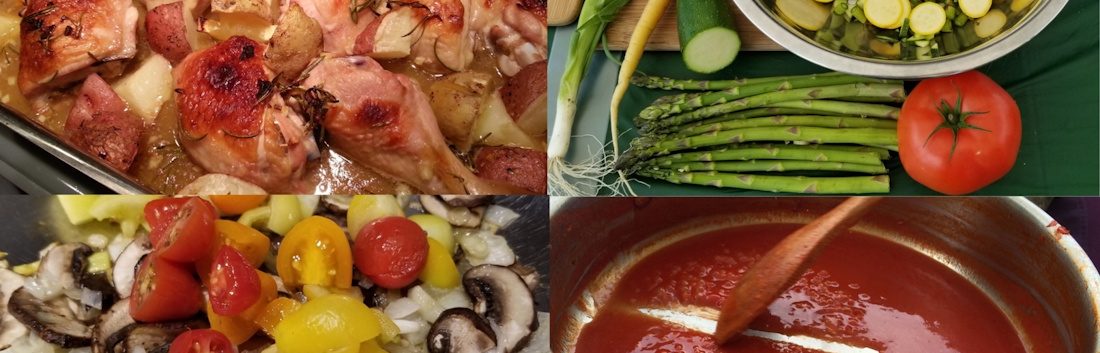
Sauce from Freshly Picked Tomatoes

This was my second time making homemade tomato sauce from tomatoes from my garden this summer.  The first time, I started with 2 pounds of tomatoes and that just did not make enough sauce for my druthers.  This time, I started with over 4 pounds of assorted types of  tomatoes, including 3 plum tomatoes from the plants in the whiskey barrel in my back yard.

plum tomatoes in my back yard

plum tomatoes in my back yard

I cut a small X at the bottom of each tomato, put them in almost boiling water for a minute or so, cooled in ice water, and slipped the skins off.  I then cut the tomatoes in half, cored them, and squeezed most of the seeds and excess liquid out.  Here are the results:

Just under 2.5 pounds of crushed tomatoes from a bit over 4 pounds of whole tomatoes

Just under 2.5 pounds of squeezed tomatoes from a bit over 4 pounds of whole tomatoes

Next, I added about 2 T of extra virgin olive oil and 3 cloves of garlic, chopped, to my 10 inch saute pan, put the heat on med-high, and got things sizzling just a bit, turned down the heat and sauteed until the garlic was aromatic.  Then – the fun part:  mushing/crushing up the tomatoes with my hands before adding them to the pan.  Yes, is IS okay to play with your food!

I also added a teaspoon each of salt and sugar at this, followed by a chopped green chili pepper and a Tbsp of fresh thymes leaves  from our attic balcony garden:

peppers and thyme in the sky.  For Wakefield MA folks, that is the Galvin School parking lot in the background.

peppers and thyme in the sky. For Wakefield MA folks, that is the Galvin School parking lot in the background.

I also added a Tbsp of chopped fresh basil leaves at this time.  After simmering for 5 or 10 minutes, I used a slotted spoon to remove the pulp so the liquid could cook down and thicken.

pulp and liquid separated

pulp and liquid separated

Here is the liquid after simmering uncovered for 20 minutes:

thickened sauce makes a great base for the sauce

thickened liquid makes a great base for the sauce

At this time, I added back the pulp, and added a teaspoon of fairly finely chopped fresh mint leaves, also from my attic garden.  Here are two pictures showing how many mint leaves make a teaspoon of chopped mint.  That is chocolate mint, by the way.  My favorite!

mint leaves with tablespoon for size perspective

mint leaves with tablespoon for size perspective

a teaspoon of chopped mint

a teaspoon of chopped mint

I let the sauce simmer a bit more and, voila!  Amazing sauce – nice and thick.

Thick and chunky sauce

Thick and chunky sauce

Two cups sauce, to be exact

Two cups sauce, to be exact

This came out REALLY good!  YUM!

Here is the list of ingredients I used this time around:

  • Fresh tomatoes, assorted varieties, just under 4 1/2 pounds
  • 2 Tbsp olive oil, extra virgin
  • 3 good-sized cloves of garlic, chopped
  • 1 tsp sugar
  • 1 tsp salt
  • one green chili pepper, de-seeded and chopped
  • 1 Tbsp chopped fresh basil
  • 1 Tbsp fresh thyme leaves
  • 1 tsp chopped fresh mint leaves

Did I miss anything?  <grin>  Of course,  I will probably vary the recipe ingredients and minutes of simmering each time I make sauce.  But, this should do as a good guide.

I’d like to extend a special thanks to food blogger extraordinaire Chez Pim.  I found her post 15-Minute Tomato Sauce. Really. when searching for tips on making sauce from fresh tomatoes.  While my version takes more than 15 minutes, I got the idea of separating out the pulp and thickening the liquid by itself from her.  Based on my previous sauce making, I can say that the separation method is worthwhile, whether you are in a hurry to make the sauce or not!

Simmered Greens – Collard, Mustard, and Arugula

I have a number of recipes for collard greens – some vegetarian, some more traditional, some specifying longer cook times, and one I found and use often that cooks up collards  “quick and easy.”   Before I get into the details of how I prepared them to serve with the Pan Seared Shrimp, here is the quick and easy (and tasty!) one from Cooking Light, November 1994.

Quick Collard Greens

  • 1 cup low-salt chicken broth, divided
  • 4 garlic cloves, finely chopped
  • 11 cups tightly packed chopped fresh collard greens (about 4 1/2 pounds)
  • 1/4 teaspoon crushed red pepper
  • 1/8 teaspoon salt

1. Heat 1/2 cup chicken broth in a large Dutch oven over medium heat until hot. Add garlic, and cook 2 minutes, stirring frequently.

2. Add collard greens and remaining 1/2 cup broth; stir well. Cover and cook 7 minutes, stirring occasionally. Remove from heat; stir in crushed red pepper and salt.

##

You can always add a bit of smoked parprika or some scraps of ham to add a little of that tradional “ham hock” flavor.

But – now for the latest greens recipe.  By the way, it is even better the next day.  I am having some for breakfast as I write this part of the post. YUM!

Now,  for years I didn’t really have a clue as to what to do with collard greens beyond toss them in soup.  How this happened, given that I followed different vegetarian diets for years, including vegan and macrobiotic, I do not know!  But, given that I have a ton of them and other greens in the garden I help with, I am glad I know what to do with them, now!

I know that prepping them was always a mystery for me, as was know how much resulted in how much once cooked.  For those who are not familiar with collards, I took some pictures and will include written steps to help you along. But first, here are the ingredients I used most recently.  Please note that you do not need to follow the amounts exactly when you make your greens.  This is a ART not a SCIENCE.  It is also a way to use up greens and ham scraps.  <grin>  I am just recording what I did so I can use it in the future as a guideline, as should you!

For example, I was planning to just do collard greens, but they cooked down so much, I cut the greens off the baby turnips I had bought and grabbed some argula I had picked a few days ago and added them, plus an additional cup of stock (I started with 2 cups) and then let it all simmer. Again, an art, not a science!

Assorted Greens  Simmer

  • 2 TBSP olive oil
  • 2 medium oinions, chopped medium
  • 2 clove garlic, chopped
  • heaping 1/4 teaspoon dried red pepper flakes
  • 3 cups veggie or other stock
  • 5-6 oz ham scraps
  • 11 oz chopped collards (maybe two bunches from the market?)
  • 9 oz wild chopped arugula (the skinny leaves with pronouced indentations – from my garden)
  • 9 oz turnip chopped greens (from the baby white turnips at the Farmer’s Market)

Heat the olive oil in a heavy saucepan or dutch oven. When hot, add onions, garlic, and pepper flakes and saute until soft, 5-10 minutes. Add ham scraps and suate for a few more minutes, then add stock and greens (or, you can add greens and wilt before adding stock). Bring stock to a light boil, cover pot tighty, and simmer for around an hour. Once there greens are quite tender, you can hold on low for hours.

I took some pictures while I made this dish, partly to show an easy way to prepare collards, and partly because I have fun taking pictures.  🙂

The first time I prepared collards greens in a way that came out really tasting really good was for my New Year’s Day open house on 1/1/09.   You’ll find the recipe for vegatarian collard greens elsewhere on this blog, but there was one issue.  It took a LONG time to prepare the collard greens!  But now I know a better way…

Slice the thickest part of the stem off. the photo shows only one leaf,but you can do this with more than one leaf at a time.  Then stack the leaves, roll them up, and slice into 1 1/2 inch wide strips.

collard stem

slice the stems

chopping collards

chop the leaves

collards done

a bunch of leaves all chopped

bowl of collard

all done - one-cup measure to right for scale

onion and ham

Saute the onion, garlic and peper flakes and add the ham.

Then, add the chopped collard greens

Then, add the chopped collard greens

Once the collards cooked down, I realized that I needed more greens and added the turnip and arugla.

just collards cooked down

just collards cooked down

with other greens added

with other greens added

Remember, you don’t have to do greens and stock in two parts!  This is just what I did when creating this dish.

Note: when preparing the other greens, do chop off the thicker stems – most get soft from the long simmer, but if too thick, they can be tough.

Another Note: if you don’t have ham or don’w want to use it, add maybe a teaspoon or so to taste of smoked parika if you want a deeper flavor.  Also, you can add fresh or canned tomatoes to this dish at the end if you like.

I FINALLY figured out how to use the perfect gift

Last Christmas, I received a lovely, thoughtful gift from the Coolidge family, with whom I grew up on Park Ave in Wakefield.  (Daughter Linda and I have been best friends since 1965! And, coincidentally, the canisters peeking out from behind the book in the photo below were a gift from Linda and her husband Mike about  15 years ago.)

Here it is:

This lovely yet sturdy looseleaf holds original and/or favorite recipes

This lovely yet sturdy looseleaf holds original and/or favorite recipes

It has lined blank pages and plastic sleeves to protect the pages.   Unfortunately, I have a bit of a problem with lined blank pages.  The problem is my handwriting…

Oh dear, what was that I wrote?

Oh dear, what was that I wrote?

BUT, dawn finally broke over Marblehead, as they say.  (Is that saying specific to the Boston Metro North Shore?)  I just got a very cool cooking and recipe program call The Living Cookbook that enables me to easily input recipes and then print them out in a consistant format.  Why not just print them and stick them in with the pages and inserts?  Works for me!

cookbook typed

Hey, I can read all that!

So, a happy ending – Thank you Frank and Lillian Coolidge for a super gift!  Now I can put all my “use often” recipes in this book instead of searching on the computer, rustling through pages of paper, and/or printing out yet ANOTHER copy when I need it.

By the way, Mr. Coolidge, I am hoping to get a cooking show going on WCAT – you WILL be invited as a guest!