Author Archives: wadennis42

Simply the Best Roast Chicken!

Sometimes simple does it just fine.  Take chicken, for example.You can dress it up, cut it up, marinade it, grill it, and use it in innumerable recipes for soups, stir fry dishes, casseroles, pasta dishes, wraps, and more.  One of the most versatile of foods, it is a staple in most, if not every major cuisine and culture.

But  just tossing a whole chicken in a high temperature oven with a little butter and some vegetables can result in the most delectable meal you could ask for. And that’s what I did last night.

Before

Before – everything right in the pan with no rack.

I usually butterfly chicken, or turkey, for that matter, when roasting in the oven because it results in more even cooking and browning.  If you have never tried it, get yourself a pair of very sharp cooking shears and click How to Butterfly a Chicken for excellent instructions.

In fact, it was the recipe presented in the post linked above by Deliciously Organic blog author Carrie Vitt that inspired my version of roast chicken, sans squash but with potatoes. But, bottom line, you can do this using any number of vegetables and combinations thereof. Just be sure the quicker cooking veggies are cut in bigger chunks so they don’t get overdone during the roasting process.

All I did was put four small potatoes, a few carrots in big chunks and two medium onions quartered in with my 4.5 lb chicken, brushed everything with melted unsalted butter, seasoned with kosher salt and freshly ground black pepper, and put it in the oven at 450 degrees for about an hour or so. I used my convection option, but a preheated hot oven will also do the trick. Just be sure to  cook until it reaches to 165 degrees in the deepest part of the breast.

AFTER

After

Cook’s note: if the chicken seems to be getting too browned before it comes to temperature, cover with foil for the last 15 minutes or so.

As you can see, this came out beautifully.  If you click the photo, you will be able to see the resulting juices in the pan – plenty to make a cup or more of delicious gravy to go along with the tender and juicy chicken and the roasted veggies. And that’s what I did.

Like I said, sometime simple does it fine.

*  *  *  *  *  *  *  *  *  *  *  *  *
Another note: Using amazingly fresh ingredients helped make this dish even better.  The chicken was pasture-raised by Copicut Farms, butchered just a few days before and purchased at the Winchester Farmers Market, and the potatoes and carrots were purchased on the last day of the Wakefield Farmers Market from Farmer Dave’s.  There is NOTHING like freshly butchered pasture-raised chicken and locally grown and dug potatoes and carrots… The onions were from Market Basket – but at least were organically grown. 🙂

Caldo Verde: A Classic Fall or Winter Soup from Cook’s Illustrated

I admit it. I am totally in love with my magazine and online subscriptions to Cook’s Illustrated, even though I do find some of the recipes a bit fussy for my taste. But this Caldo Verde recipe is quick and easy to prepare, uses inexpensive  and healthy ingredients, and tastes sublime. In this version, I did not change anything in the recipe other than to use leek instead of onion and reducing the amounts proportionately because I only had 7 oz of chorizo sausage on hand instead of the 12 oz called for in the recipe, although I did use the full pound of collard greens.

First, brown the chorizo

First, brown the chorizo

Here is the recipe verbatim from Cook’s Illustrated:

Caldo Verde

1/4 cup extra-virgin olive oil
12 ounces Spanish-style chorizo sausage, cut into 1/2-inch pieces
1 onion, chopped fine ( I chopped up some leek, instead)
4 garlic cloves, minced
Salt and pepper
1/4 teaspoon red pepper flakes
2 pounds Yukon Gold potatoes, peeled and cut into 3/4-inch pieces
4 cups chicken broth
4 cups water
1 pound collard greens, stemmed and cut into 1-inch pieces
2 teaspoons white wine vinegar

Leeks and garlic

Leeks and garlic

Heat 1 tablespoon oil in Dutch oven over medium-high heat until shimmering. Add chorizo and cook, stirring occasionally, until lightly browned, 4 to 5 minutes. Transfer chorizo to bowl and set aside. Reduce heat to medium and add onion (or leek), garlic, 1 1/4 teaspoons salt, and pepper flakes and season with pepper to taste. Cook, stirring frequently, until onion is translucent, 2 to 3 minutes. Add potatoes, broth, and water; increase heat to high and bring to boil. Reduce heat to medium-low and simmer, uncovered, until potatoes are just tender, 8 to 10 minutes.

cooking the potatoes

cooking the potatoes

Transfer 3/4 cup solids and 3/4 cup broth to blender jar. Add collard greens to pot and simmer for 10 minutes. Stir in chorizo and continue to simmer until greens are tender, 8 to 10 minutes longer.

Gorgeous collard greens from Flats Mentor Farm

Gorgeous collard greens from Flats Mentor Farm

adding the greens

adding the greens

Add remaining 3 tablespoons oil to soup in blender and process until very smooth and homogeneous, about 1 minute. Remove pot from heat and stir pureed soup mixture and vinegar into soup. Season with salt and pepper to taste, and serve. (Soup can be refrigerated for up to 2 days.)

Before adding the processed liquid and potatoes

Before adding the processed liquid and potatoes

Hey, I just realized I forgot the vinegar…Oh well, next time.  🙂

Anyway, there really isn’t much more to say because I pretty much followed the instructions as is, with the only other minor difference being that I used my immersion blender with the handy blending jar it comes with for such purposes to do the pureeing part.

This recipe is a total winner in my book, and Steve loved it, too.  Plus, I can see using it as a jumping off point for a number of variations depending on what I have on hand on a given day.  In any case, it’s a keeper!

DONE!

DONE!

Under Pressure: A Tough Old Bird Goes Tender

Upon learning that I had never prepared a stewing hen, Jeff from Copicut Farms suggested I try one since he knows I like to experiment in the kitchen.

Spoiler Alert: 15 minutes in a pressure cooker does the trick, although I know one can have equally excellent results using a crock pot or simmering or braising the bird long and slow on the stove top or in the oven.

The other spoiler alert:  Stewing hens are UG-U-LY!

The hen with the ingredients going into the pressure cooker.

The hen with the ingredients (other than the neck- I put that in the freezer to use later for stock or a gravy base) going into the pressure cooker.

This angle shows just how skinny the breast is.

This angle shows just how skinny the breast is.

I was a bit short on time and I also had a hankering for garbanzo beans since, in my research, I had come across some recipes that combined chicken and chick peas, as garbanzos are also known, in a hearty stew, hence my opting for the pressure cooker method.

I came up with an outline for a recipe, posted it on Facebook so I would have it in writing, and onward into the kitchen I went to get the beans into a quick soak before cooking them with the chicken and barley.  I had decided I wanted a stew and barley seemed a good choice for a fall concoction.

There are some variations in instructions for soaking beans, but generally, dried legumes bigger than lentils or peas need to be soaked about 8 hours and then drained before cooking in fresh water.  If short on time, you cover the beans by about an inch of water in a pot, bring it to a boil, remove from heat, and let sit covered for an hour in lieu  of the longer soak.

In a real pinch, you can opt to cook beans in the pressure cooker without any soaking, but unsoaked garbanzos would have taken way longer than the chicken and barley; plus, I’d rather soak beans so as to make them more digestible.

While the beans soaked, I gathered the first set of ingredients and cut up the chicken and seasoned it with salt and freshly ground pepper.

Cut up and seasoned with salt and pepper

Cut up and seasoned with salt and pepper

Once the beans were ready to go, I lightly browned the chicken in some olive oil, added a clove or two of garlic, (about a scant tablespoon chopped) stirred until fragrant, and then added the soaked and drained garbanzos and 1/2 cup pearl barley that I had first picked over and rinsed.  I tossed in two bay leaves and topped it all off with 6 cups of water, closed the lid, brought to pressure, and cooked for 15 minutes.

lightly browned and garlic just added

lightly browned and garlic just added

chicken, with the garbanzos, barley, and 6 cups of water ready to go

chicken, with the garbanzos, barley, and 6 cups of water ready to go.

After the 15 minutes, I removed the pressure cooker from heat and let it sit until the pressure came down naturally and the pot could be opened safely.  (You can run a pressure cooker under cold water – the fast release method – but it can wreak havoc with some foods, such as beans!)

First I removed the chicken.

First I removed the chicken.

Just so you know, while I left the skin on for the flavor, it sure does not look pretty!

Just so you know, while I left the skin on for the flavor, it sure does not look pretty!

All drained!

All drained!

Then I drained the beans and barley because they were almost too done and I still had carrots and leeks to cook in the liquid.

Chopped carrot and leek - both veggies from Farmer Dave.

Chopped carrot and leek – both veggies from Farmer Dave.

Along with carrot and leek from Farmer Dave, I chopped up a bunch of fresh parsley from Flats Mentor Farm to make a 2-3  tablespoons, and added a teaspoon each of dried oregano and dried thyme to the liquid.

This parsley from Flats Mentor Farm is so gorgeous I had to take a picture.

This parsley from Flats Mentor Farm is so gorgeous I had to take a picture.

I also had a tomato that was just about too ripe, so I chopped that up to add to the fun.

I was just using up a tomato, but I recommend keep this ingredient in the recipe. :)

I was just using up a tomato, but I recommend keeping  this ingredient in the recipe. 🙂

Next I brought the liquid back to boil, added the veggies, and simmered until the veggies were tender. 

While that was going on, I picked the now cooled chicken off the bones and the skin off the chicken and pulled the chicken meat into bite-sized pieces.

The just over 2.5 lb chicken resulted in just over 9 ounces of meat.

The just over 2.5 lb chicken resulted in just over 9 ounces of meat.

Note how dark the meat it compared to that from a chicken raised for butchering. It makes for a nice deep flavor…Nothing against Copicut Farms regular chickens!  Those rock, too.  🙂 And have more meat, of course.
Once the veggies were tender, I added the chicken, garbanzos, and barley back to the stock, and heated through.

mix

All together and ready to heat through.

All done! Delicious.

All done! Delicious.

A final touch of salt and pepper was all it needed.  Quick, easy, tasty, nutritious.  A winner!  I’ll be asking Copicut Farms to bring some more stewing chickens to the market this week, that is for sure!  And, thanks for the suggestion, Jeff!  🙂

What the Hake? It’s really good!

Last week Michelle The Fish Lady (aka Globe Fish at the Wakefield Farmers Market) recommended that I try some hake, a white fish that is similar in flavor to haddock et al.

Always up to trying something new, I got a pound and decided to prepare it in the quickest, most simple way that I have used successfully with other fillets of white fish, which is to coat the fish with flour ( I use whole wheat) seasoned with a bit of salt and plenty of freshly ground pepper, dip it in egg, then do a final coat of a mix  fine and panko breadcrumbs before quickly frying in a  small amount of oil.

Seasoned flour, egg, and breadcrumbs and panko for the crust.

Seasoned flour, egg, and breadcrumbs and panko for the crust.

Honestly, this is such an easy way of preparing all kinds of fish!

Seasoned flour, egg, and breadcrumbs and panko for the crust.

Close up of the floured fish.

NOTE: Be sure to shake off the excess flour and then let some of the egg drip off before moving to the next step.  You do, however, want as much of the breadcrumbs and panko on the fish as will stick.  🙂

Once the fish was coated, I just heated up … I think I used peanut oil, but canola or sesame would work fine… anyway, I heated up about a 1/2 inch of oil until it was shimmering and hot enough to sputter if flicked with water droplets and put the fish right on in.

Fish in the oil

Fish in the oil

I actually cooked the fish longer than I meant to, but basically, since the fillet is thin, you can just cook until crisp and browned on each side.

done!

done!

Although, when I make this again which will be soon because I bought some more this past Saturday, I might just do it this well done on the outside because, as you can see by the next picture, it was perfectly done in the middle.

fished plated with corn

So moist and tasty! Shown with freshly picked corn from Kelly’s Farm.

So good and so easy!  Thanks to The Fish Lady for the fish, Kelly’s Farm for wonderfully crisp corn, and, not shown, Farmer Dave for fantastic potatoes that I sliced thin, coated with salt, pepper, and olive oil, and roasted at 400 for about 40 minutes.  And then, there was the salad of greens from Flats Mentor Farm and more… YUM!

Kale Chips: easy, foolproof, and even the dog likes them!

I have tried making kale chips here and there over the years but was never that impressed with the results. But finally, I have learned a few tricks that guarantee perfect kale chips every time.  It is all in the technique and the proportion of oil and other flavorings to the amount of kale.

By the way, I kid you not in my title; my dog Buster loves kale chips!  You can click HERE to see the proof.  🙂

Here is the recipe I have been using this summer.

Kale Chips with Tamari and Sesame Seeds

  • 1/2 pound bunch of curly kale
  • 1 tablespoons sesame oil
  • 1 tablespoons sesame seeds, hulled or un-hulled
  • 2 teaspoons tamari (soy sauce)
coating the kale

coating the kale

  1. Rinse the kale, shake dry a bit.
  2. Tear leaves off the stem, or remove the stem by folding the leaf in half and slicing the stem off, as shown in this handy video.
  3. Further tear the leaves into pieces approximately 3 or 4” square in size and run through a salad spinner and/or just spread out and let air dry until totally dry.
  4. Preheat your oven to 425 degrees and put out two cookie sheets.
  5. Mix together the oil and tamari and, in a big bowl, toss with the now dry kale pieces until the leaves are equally coated.
  6. Next, sprinkle with the sesame seeds and toss to coat evenly.
  7. Spread the seasoned kale pieces out on the two cookie sheets, being sure that there is little or no overlap.

    kale on they tray

    kale on the tray

  8. Once the oven reaches 425 degrees, put the two cookie sheets with the kale in the oven.
  9. After a few minutes (you will hear the oil start to sizzle, but set a timer for 3 minutes so you don’t forget and burn the chips!), turn off the oven and let the kale continue baking as the oven cools for another 20 minutes or until very crispy.

    kale on tray and in bowl

    Here they are!

  10. Remove from oven, use a spatula to gently loosen any chips that are sticking, and then let the chips cool before storing in an airtight container.  Or, put them in a bowl and start eating them!
kale in bowl

Yum!

Notes:  

  • Type of Kale:  Any type of kale will work, but be aware that different types may result in a lesser or greater amount of leaves, once de-stemmed, and adjust the amounts of other ingredients accordingly.
  • Oil and seasonings: You can use any kind of oil, including olive or canola, but I like the light slightly nutty flavor of the sesame oil with the seeds and soy.  You can also add salt or use a totally different flavor combination.  But a tablespoon or so of oil with a 3 to 2 proportion of oil to any other liquid seasoning per ½ pound is a good guideline.

I actually start off with a full pound of kale and double the amounts of oil, tamari, and sesame seeds because my oven has enough room and shelves to accommodate four cookie sheets at a time, and, due to more bulk going into the oven at once, I preheat to 435 degrees and cook for the full 5 minutes before turning off the oven.

This recipe is foolproof because, as long as you don’t forget to set a timer and thus forget to turn the oven off and let the kale bake to long at full heat, you will not end up with a mass of charred, disintegrated leaves.  And, the sticking to the proportion of oil and liquid per pound of kale ensures that you won’t end up with chewy, versus crispy chips. You may have to experiment a bit because everyone’s oven is a bit different, but with these guidelines, at least you won’t burn your chips!

Another shot of the kale chips

Another shot of the kale chips

These chips really are good, and a great way to use kale that, however tasty in a salad, soup, or stir fry, can end up abandoned in the fridge.  And we don’t want that to happen, do we?

Enjoy!

Easy Roots and Greens Saute

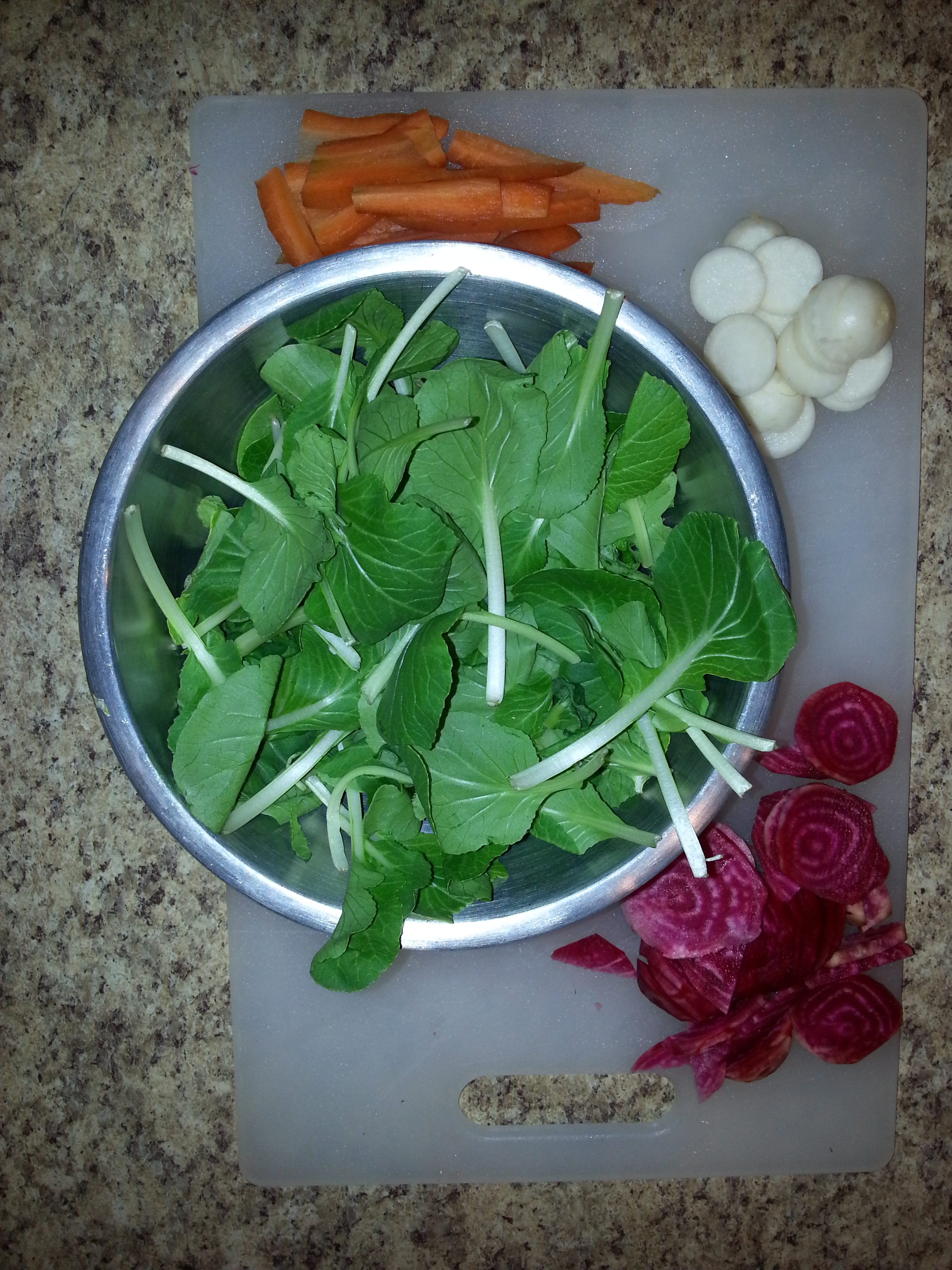
Start with beets, carrots, baby turnips, and greens:

root veggies and greens

All from Farmer Dave’s in Darcut!

Heat some olive oil in a pan, add root veggies, and saute:

root veggies in pan

Cook the roots first.

Turn heat to very low, cover, let cook until tender, then stir in greens, cover, and cook for a bit more.

Almost ready!

Almost ready!

Season with ground coriander, to taste, starting with 1/2 teaspoon.

That’s it!  Season further with salt and pepper if desired, and/or with whatever flavors strike your fancy.  🙂

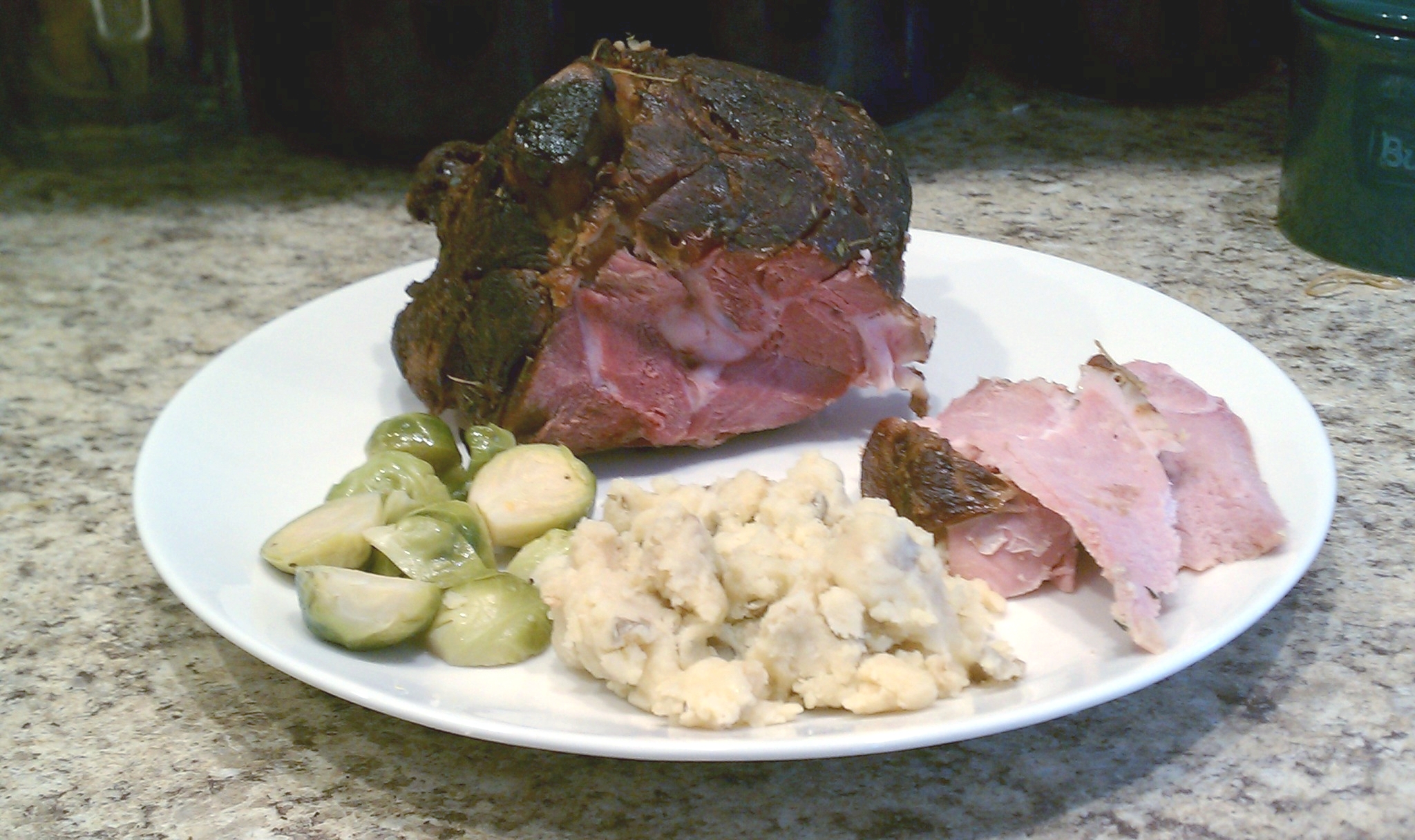
A Ham Like No Other – Locally raised is the best!

Homemade Taco Seasoning Mix

Those little packs of taco seasoning are convenient and do the trick just fine, taste-wise. But, if you want to control your salt intake, increase the heat, save a few pennies, or just didn’t realized that you forgot to buy the seasoning pack until you have the meat cooked and ready for the spices, this recipe will work just as well, if not better.

TACO SEASONING MIX  from Cooks.com

2 tsp. instant minced onion
1 tsp. salt
1 tsp. chili powder
1/2 tsp. corn starch
1/2 tsp. crushed dried red pepper
1/4 tsp. dried oregano
1/2 tsp. ground cumin
1/2 tsp. instant minced garlic

Combine all ingredients and use immediately or seal and store. You can also double, triple or more the amounts so as to have plenty on hand as needed.

TACO FILLING:
1 lb. ground beef
1/2 c. water
1 pkg. Taco Seasoning Mix

Brown beef, drain off excess grease. Add water and seasoning mix. Reduce heat and simmer 10 minutes. Stir occasionally.
—————————————————————-
If you don’t have minced onion, chopped about 1/2 a medium onion and saute in the pan before browning the meat or add minced fresh onion before adding seasoning.  Also,  1/4 to 1/2 teaspoon salt works fine, and I often use cayenne powder  for the red pepper.

This recipe is great as is or as a basis for your own special combination of spices. Just make sure you keep chili powder and cumin in your spice cabinet and you will be good to go for anything Mexican.

And that’s it!  Just a spur of the moment post, here.  Nothing but the facts.  🙂

Steak – Definitely Not Just for Grilling!

My husband would have never agreed with the title of this post before trying steak prepared via a simple stove-top technique presented by Chef Tiffani Faison on NECN earlier this week.

Although we tune into NECN mostly for the weather (we are big Matt Noyes fans), we caught Chef Tiffani’s Valentine Dinner segment and decided to try it for ourselves, albeit putting our celebratory meal off to Friday night. You can see the video, recipe, and the chef’s extra tips by clicking HERE.

I had hoped to get some locally raised beef for this meal, but was not able to get to the Medford Winter Farmers Market on Thursday, so I opted for two strip steaks from Farmland, our local grocery store. [Note to self: talk to Frank about offering locally raised meats at Farmland!]

seasoned steak

This photo is deceptive – these are 2″ thick – although the one on the right was a bit thinner (1 1/2″) on one end.

For this recipe, all you need is:

  • strip steak(s) or comparable cut
  • freshly ground black pepper
  • kosher salt
  • high quality olive oil
  • garlic cloves
  • fresh sprigs of thyme
  • butter – REAL butter!

Other than that – you need to have a really good pan.  Chef Tiffani recommends cast iron, but any pan with a thick bottom that spreads and hold heat evenly will work just as well.  How do I know? I’ll tell you.  🙂

I had two steaks, but only one of my well-seasoned cast iron pans is big enough  for one steak, never mind two.  But, I also have an All-Clad saute pan… Time to experiment! Good thing Steve knows his way around the kitchen.

pans ready

Dueling pans set and ready to go. 🙂

The first step was to bring the meat to room temperature by removing it from the fridge an hour or so before cooking. Then we prepped each station with a few crushed garlic cloves, a small bunch of thyme, and partially melted butter, as well as a basting spoon and tongs at each site. We put about 2 tablespoons of olive oil in each pan and were ready to go.

Steve took his place at the cast iron and and I stepped up to the All-Clad saute pan, and we were off!

Here is the technique, edited down to a few simple bullet points:

  • Season steak with pepper and LOTS of salt
  • Add 2 T oil to pan
  • Turn heat under pan to HIGH
  • When oil is HOT, (smoking is good!) put steak in the pan
  • Baste steak with the olive oil and juices for 3.5 – 4 minutes
  • Flip steak and baste for another 2 minutes
  • Turn off heat and add crushed garlic and thyme to pan
  • Add butter, put garlic and thyme on steak, and baste all with butter
  • Remove steak from pan and let rest for at least 10 minutes.
First one out!

First one out!

Note the lovely crust!  We also did as the chef suggested and used the tongs to hold the steak fat band in the oil to crisp that up, also. Holding the steak so that just the fat is in the oil is also a great way to test whether the pan is hot enough – if it gives a good strong sizzle, it is ready for the steak.

Resting

Resting for just a bit.

While the steak rested, I steamed some asparagus and finished up the potatoes…Oh, I forgot to mention the potatoes!  To accompany, I cut up five or so small red potatoes and half a big Vidalia onion, added around 10 little cremini mushrooms, and tossed them with freshly ground black pepper, kosher salt, and a tablespoon or two olive oil in a corning ware casserole. I  also had some thyme to spare…

Roasted potato, crimini mushrooms, and Vidalia onion.

Roasted potato, cremini mushrooms, and Vidalia onion.

I then covered with foil and cooked for about an hour at 400 degrees, obviously starting them well before the steak. Once the steak was done and resting, I removed the foil and kept cooking to crisp up just a bit.

And then, a lovely dinner.  This picture does not do it credit. At all.

plated

Plated – with photo taken after the start of the meal!

We could have done fine with just one steak rather than two, but we did have plenty leftover!  But, in general, one steak weighing a pound or a bit under is more than enough for two.

LOTs of leftovers.  :)

Lots of leftovers!

Bottom line, this is a really tasty way to prepare steak, as well as quick and easy.  And, here is a cleanup tip: Let the pan sit overnight and use some paper towels to wipe out the congealed fat. Then, simply wash as usual if using a stainless steel pan, or, if using cast iron, just soak for a bit in very hot water and then wipe clean.

And, which pan did the best job?  After trying some of the second steak the next day, I can say that they both produced an equally crusty and delicious steak.  So, while cast iron is the classic choice, feel free to use a stainless steel pan providing it has a heavy bottom and can handle high heat.

But, especially if preparing a special meal to share with your honey, I recommend the pan contest, or a least work together to create the entire meal. That will add the best seasoning of all.  ❤

So Simple Broccoli Soup

Why broccoli soup? Well, one reason is the two full bunches of broccoli (read: over three pounds) that Steve brought home instead of the 2-3 broccoli crowns I requested…They say necessity is the mother of invention but, in this case, too much of a good thing ended up inspiring a wonderful new favorite way to get our vegetables.

Soup was the logical way to use up that much fresh broccoli when the household is comprised of just two people, even two who love their veggies.  I have recently been making a lovely roasted cauliflower soup (I’ll post the recipe soon, I promise!) that is basically just roasted cauliflower and onion with stock and seasoning, so I was wondering if I could do something similar with the broccoli.  So…off to the Internet went I.

The short story is that, at least during my hasty search, I did not find any broccoli soup recipes that did not use something to thicken it, whether it be a flour roux, dairy, nuts, or soy or rice milk. I did, however, find one that added carrot and another that included apples.  Well….since I had plenty of broccoli to spare, I decided to just go with no thickener as see how it would turn out.  Of course, I knew I had the option of adding a roux or cream at the end if the texture was to0 thin for the taste.

soup

The final product. Yum!

Here is what I used:

  • 2 tbsp butter
  • 1 tbsp olive oil
  • 1 medium onion, chopped
  • 1 medium carrot, diced
  • 1/2 or a bit more dried thyme
  • fresh ground black pepper, to taste
  • 1 smallish apple, peeled and chopped
  • about one pound or 8 cups  of broccoli florets
  • 4 cups  stock – I used chicken*
broccoil florets

The 8 cups florets

First, I melted the butter and olive oil and added just the onions, cooking on low  until starting to soften, and then added the diced carrot and the dried thyme and ground pepper and continued cooking, now over medium, for a few more minutes.

Starting with the onions, carrot, and seasonings.

Starting with the onions, carrot, and seasonings.

I then added the chopped apple, stirring for a bit to coat it in the oil and seasoning, then stirred the broccoli to coat as well. Next, I added the 4 cups of stock, brought it all to just a boil and then simmered for about 15 minutes or so, until the broccoli was fork-soft.

*A Note about stock:  I used chicken stock, but if you want a totally vegetarian version, I am sure veggie stock, or even plain water will work, albeit you might want to add some tamari or better yet,  miso, and/or other seasonings to give a bit more depth to the flavor.  OR, keep it light and punch up the brightness with a dash of rice vinegar or lemon juice.

Cooked and reeady to blend!

Cooked and ready to blend!

The last step was to blend.  I used an immersion blender, but a regular blender would work, as well, as would just using a potato masher or food mill – whatever you have available.

DONE!

DONE!

It sure looked tasty, although it was not as thick as the typical “Cream of whatever” soup. But the taste was superb and Steve and I both agreed that the texture was perfect as is – no additional thickening needed.  In fact, I think any thickener would reduce the brightness of the flavor…hmmm, I bet a squeeze of lemon would be a nice touch, albeit perhaps not on a cold winter day…

I will add that I don’t think using a thickener would hurt the recipe – but the change in texture would probably inspire, and possibly necessitate, some additional seasoning.  But, it is all a matter of taste.  Adding a  1/2 cup of cream at the end, or adding a few tablespoons flour and cooking with the veggies before adding the stock are two options, as is adding a roux at the end.

But honestly this is great as is – and note that I added no salt.  AND, Steve didn’t even add any!  THAT’S saying something.  🙂

And that’s that!  I suspect Steve and I will eat this batch of soup in a day or so, but I’ll make another batch with my OTHER big bunch of broccoli and see how it freezes.  I’ll report back when I do.   In the meantime – take this recipe out for a spin and make it your own.  I will again say: YUM!
UPDATE:

I froze some of the first batch and defrosted it the next day.  Still fabulous!  Make a big batch when you find nice fresh broccoli on sale. 🙂